
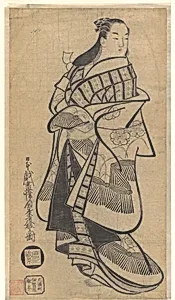
Courtesan
ca. 1714
Medium
Monochrome woodblock print (sumizuri-e); ink on paper
Dimensions
22 1/4 x 12 in. (56.5 x 30.5 cm)
Classification
Prints
Culture & Period
Japan · Edo period (1615–1868)
Department
Asian Art
Museum
Metropolitan Museum of Art, New York, NY
Credit
Harris Brisbane Dick Fund and Rogers Fund, 1949
Accession Number
JP3102
Rights
Public Domain
Tags
Art Historical Context
This striking monochrome woodblock print, created around 1714 by the Japanese artist Kaigetsudō Dohan, captures the elegance of a courtesan during Japan’s Edo period (1615–1868). A time of relative peace and urban growth, the era saw the rise of ukiyo-e prints that celebrated the “floating world” of entertainment districts in cities like Edo (modern Tokyo). These works often portrayed beautiful women from the pleasure quarters, reflecting both the idealized allure of courtesans and the emerging tastes of a prosperous merchant class. Executed in sumizuri-e technique using only black ink on paper, the print exemplifies early woodblock printing before the advent of color. At over 22 inches tall, its impressive scale allows for graceful, elongated lines that emphasize the figure’s flowing robes and poised stance. Such large-format prints were designed to be displayed like hanging scrolls, making sophisticated imagery accessible beyond elite circles. As part of the Metropolitan Museum’s Asian Art collection, this piece highlights the cultural importance of bijin-ga, or “pictures of beautiful women,” in shaping popular visual culture. It offers viewers a window into Edo society’s fascination with fashion, status, and fleeting beauty, all rendered with remarkable economy of line.