
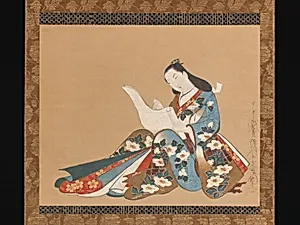
懐月堂度辰筆 文を書く遊女図|Courtesan Writing a Letter
ca. 1715
Medium
Hanging scroll; ink and color on paper
Dimensions
Image: 19 1/2 × 23 5/8 in. (49.5 × 60 cm) Overall with mounting: 53 × 28 13/16 in. (134.6 × 73.2 cm)
Classification
Paintings
Culture & Period
Japan · Edo period (1615–1868)
Department
Asian Art
Museum
Metropolitan Museum of Art, New York, NY
Credit
Mary Griggs Burke Collection, Gift of the Mary and Jackson Burke Foundation, 2015
Accession Number
2015.300.119
Rights
Public Domain
Tags
Art Historical Context
In the vibrant world of Edo-period Japan (1615–1868), Kaigetsudō Doshin captures a moment of quiet intimacy in *Courtesan Writing a Letter* (ca. 1715). This hanging scroll, rendered in ink and color on paper, depicts a yūjo—a high-ranking courtesan from the Yoshiwara pleasure district—poised elegantly as she composes a love letter. Measuring nearly two feet across, the work unfolds like a private scene from the "floating world" (ukiyo), where fleeting pleasures and human connections defined urban life in early 18th-century Edo (modern Tokyo). Doshin, part of the esteemed Kaigetsudō school, specialized in bijin-ga, or paintings of beautiful women, pioneering a bold ukiyo-e style with voluptuous figures, flowing robes, and dynamic poses. The hanging scroll format, traditional for personal appreciation in tea houses or private chambers, allowed viewers to savor its delicate color washes and expressive lines up close. Courtesans like this one were cultural icons, often literate and skilled in poetry, their letters evoking themes of longing and transience. This piece, from the Mary Griggs Burke Collection at the Metropolitan Museum of Art, offers a window into Japan's pleasure quarters, blending sensuality with everyday grace and highlighting women's roles in a male-dominated society.