
Cover
Unknown Artist
19th century
Medium
Pineapple fiber
Dimensions
L. 96 x W. 27 1/2 inches (243.8 x 69.9 cm)
Classification
Textiles-Embroidered
Culture
Philippine, Manila
Department
European Sculpture and Decorative Arts
Museum
Metropolitan Museum of Art, New York, NY
Credit
Gift of Mrs. H. McKnight Moore, in memory of her mother, Mrs. James Suydam, 1924
Accession Number
24.93.1
Rights
Public Domain
Tags
Art Historical Context
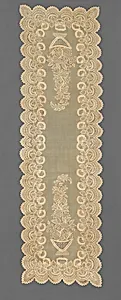
This exquisite 19th-century embroidered cover from Manila, Philippines, showcases the mastery of piña cloth—a luxurious textile woven from the fine fibers of pineapple leaves. an impressive 96 by ½ inches, its delicate, translucent medium allowed for intricate embroidery, likely featuring floral motifs that evoke the lush tropical flora of the archipelago. Produced during the Spanish colonial era, when Manila was a vibrant hub of trade and craftsmanship, such pieces were prized for their rarity and elegance, often adorning altars, tables, or beds in affluent homes. The use of pineapple fiber highlights a uniquely Philippine innovation, transforming an abundant plant into a fabric rivaling silk in fineness and sheen. Embroiderers in Manila's workshops employed tambour or cutwork techniques to create airy, lacy patterns, blending indigenous skills with European influences introduced via galleon trade. These textiles symbolized status and piety, frequently exported to Europe and the Americas. Today, this cover graces the Metropolitan Museum of Art's European Sculpture and Decorative Arts collection—a nod to its global appeal. Donated in 1924 by Mrs. H. McKnight Moore in memory of her mother, it invites visitors to appreciate the cross-cultural artistry of colonial Philippines, where nature's bounty met human ingenuity.