
Cover
Unknown Artist
ca. 1735
Medium
Silk and metal thread
Dimensions
Overall: 80 x 21 in. (203.2 x 53.3 cm)
Classification
Textiles-Woven
Culture
French
Department
European Sculpture and Decorative Arts
Museum
Metropolitan Museum of Art, New York, NY
Credit
Bequest of Annie C. Kane, 1926
Accession Number
26.260.58
Rights
Public Domain
Tags
Art Historical Context
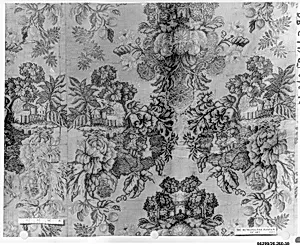
This elegant silk and metal-thread cover, woven in France around 1735 exemplifies the opulence of early 18th-century decorative arts during the Louis XV era. Measuring an impressive 80 by 21 inches, its elongated form suggests it served as a luxurious bed coverlet, table runner, or ecclesiastical hanging, showcasing the technical mastery of French weavers, likely from the renowned silk-producing region of Lyon. The intricate use of shimmering metal threads intertwined with fine silk created a luminous, tactile surface that caught the light in grand châteaux or salons, reflecting the era's taste for refined extravagance. Adorned with motifs of charming houses nestled amid blooming flowers, the design evokes idyllic pastoral scenes, blending architectural whimsy with natural abundance—a hallmark of the emerging Rococo style's playful elegance. Woven textiles like this were labor-intensive feats, requiring skilled looms to interlace thousands of threads into detailed patterns without painting or embroidery. Donated to the Metropolitan Museum of Art in 1926 through the bequest of Annie C. Kane, this anonymous masterpiece highlights France's enduring legacy in textile innovation, inviting visitors to appreciate the artistry hidden in everyday luxury.