
Cover
Unknown Artist
early 19th century
Medium
Linen, silk, metal wrapped thread; plain weave, embroidered
Dimensions
H. 42 1/2 in. (108 cm) W. 44 in. (111.8 cm)
Classification
Textiles-Embroidered
Department
Islamic Art
Museum
Metropolitan Museum of Art, New York, NY
Credit
Anonymous Gift, 1879
Accession Number
79.1.269
Rights
Public Domain
Tags
Art Historical Context
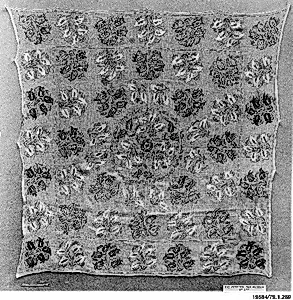
This exquisite embroidered cover, dating to the early 19th, hails from the Islamic world and exemplifies the region's masterful textile traditions. Measuring over 42 by 44 inches, it was crafted as a generous rectangular piece, likely intended for ceremonial use such as covering furniture, beds, or offerings during special occasions. Acquired anonymously in 1879 now housed in the Metropolitan Museum of Art's Islamic Art Department, it reflects the opulence of Ottoman or Persian-influenced workshops, where textiles served as both functional objects and symbols of prestige. The cover's foundation is a plain-weave linen fabric, richly adorned with embroidery in silk and shimmering metal-wrapped threads. Delicate floral motifs—evident from its tagging—bloom across the surface, a hallmark of Islamic design that evokes gardens of paradise, abundance, and eternal beauty. These motifs, often drawn from nature, were not merely decorative but carried spiritual resonance, linking the earthly to the divine. Artistically, this piece highlights the technical virtuosity of embroidery in Islamic culture, where fine stitching and luxurious materials like metal threads created luminous effects under candlelight. Such textiles underscore women's roles as skilled artisans or the work of professional guilds, preserving cultural heritage through generations of intricate handiwork. A true gem for visitors, it invites contemplation of beauty woven into everyday splendor.