
Cover
Unknown Artist
17th–18th century
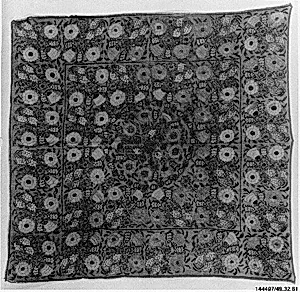
Medium
Linen, silk, silver wrapped thread; embroidered
Dimensions
H. 44 in. (111.8 cm) W. 44 in. (111.8 cm)
Classification
Textiles-Embroidered
Department
Islamic Art
Museum
Metropolitan Museum of Art, New York, NY
Credit
Anonymous Gift, 1949
Accession Number
49.32.81
Rights
Public Domain
Art Historical Context
This exquisite embroidered cover, dating to the 17th–18th century, hails from the Islamic world and exemplifies the masterful textile traditions of the era. Crafted from linen and silk with luxurious silver-wrapped threads, measures a perfect square at 44 inches by 44 inches, suggesting its use as a ceremonial cloth, cushion cover, or table furnishing in a prosperous household. Now housed in the Metropolitan Museum Art's Islamic Art Department it was generously donated as an anonymous gift in 9. The artwork's significance lies in its intricate embroidery techniques, a hallmark of Islamic craftsmanship during the Ottoman, Safavid, or Mughal periods. Artisans skillfully combined fine stitching with shimmering metal threads to create patterns that likely evoked floral motifs, geometric designs, or calligraphic elements—enduring symbols of paradise, protection, and spiritual harmony in Islamic culture. Silver wrapping on threads not only added opulence but also caught the light, enhancing the textile's visual impact in dimly lit interiors. For visitors, this cover offers a tactile glimpse into daily opulence and artistic devotion, where everyday objects became canvases for cultural expression. Its anonymity underscores the collaborative genius of unnamed workshops, preserving beauty across centuries.