
Cover
Unknown Artist
early 17th century
Medium
Linen; silk
Dimensions
19 3/4 x 31 in. (50.2 x 78.7 cm)
Classification
Textiles-Laces
Culture
Italian or German
Department
Robert Lehman Collection
Museum
Metropolitan Museum of Art, New York, NY
Credit
Robert Lehman Collection, 1975
Accession Number
1975.1.1854
Rights
Public Domain
Tags
Art Historical Context
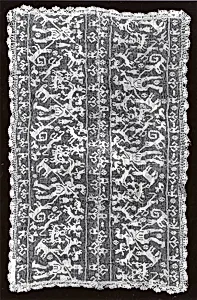
This exquisite lace cover, crafted by an unknown artist in the 17th century, hails from either Italy or Germany, regions renowned for their mastery of intricate lacework during the Baroque era. Measuring 19¾ x 31 inches, it exemplifies the opulence of textiles as luxury goods, likely used to adorn altars, furniture, or beds in affluent households. Now part of the Robert Lehman Collection The Metropolitan Museum of Art (acquired in 1975), it showcases the era's fusion of artistry and craftsmanship in everyday splendor. Woven from fine linen ground with delicate silk threads, the cover is a prime example of early lace techniques, such as needlepoint or bobbin lace, which demanded extraordinary skill and patience. Its motifs—featuring animals and human figures—bring scenes of nature and humanity to life in a delicate, airy style, reflecting the period's fascination with narrative embroidery and symbolic imagery. These designs not only highlight technical virtuosity but also evoke the cultural interplay between Italian finesse and Germanic precision. As a survivor of sumptuous domestic life, this cover offers a window into 17th-century Europe's textile trade and status symbols, where lace rivaled painting in prestige. Visitors will appreciate its fragile beauty, a testament to hands that wove stories into thread centuries ago.