
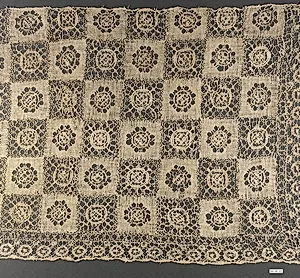
Cover fragment
Unknown Artist
16th–17th century
Medium
Embroidered net
Dimensions
L. 34 x W. 16 1/2 inches 86.4 x 41.9 cm
Classification
Textiles-Laces
Culture
German or Swiss
Department
European Sculpture and Decorative Arts
Museum
Metropolitan Museum of Art, New York, NY
Credit
Purchase by subscription, 1909
Accession Number
09.68.22
Rights
Public Domain
Art Historical Context
This exquisite *Cover fragment*, crafted by an unknown artist in the16th or 17th century, hails from German or Swiss culture and exemplifies the pinnacle of European lace-making during the Renaissance and early Baroque eras. Measuring 34 by 16½ inches (86.4 x 41.9 cm), this piece was likely part of a larger bedcover, altar cloth, or ecclesiastical vestment, where such opulent textiles signified wealth, piety, and craftsmanship. Acquired by the Metropolitan Museum of Art in 1909 through a subscriber purchase, it resides in the European Sculpture and Decorative Arts department, classified among Textiles-Laces. The medium—embroidered net—highlights a sophisticated technique where intricate needlework adorns a fine net ground, creating patterns of floral motifs, geometric designs, or figural elements typical of the period. In German and Swiss regions, lace production flourished in convents and workshops, blending local traditions with Italian influences introduced via trade routes. This labor-intensive process, often taking months or years, transformed simple threads into airy, three-dimensional sculptures of fabric, prized for their translucency and durability. As a surviving fragment, it offers a window into domestic and religious life, where lace elevated everyday objects into art. Visitors will appreciate its fragility—a testament to the skilled hands that wove status and spirituality into every stitch.