
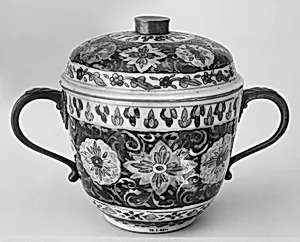
Covered bowl with floral pattern
Unknown Artist
late 18th–early 19th century
Medium
Porcelain painted in underglaze cobalt blue and polychrom enamels over a black ground (Jingdezhen ware)
Dimensions
H. 7 in. (17.8 cm); Diam. 5 7/8 in. (14.9 cm)
Classification
Ceramics
Culture & Period
China · Qing dynasty (1644–1911)
Department
Asian Art
Museum
Metropolitan Museum of Art, New York, NY
Credit
Purchase by subscription, 1879
Accession Number
79.2.897a, b
Rights
Public Domain
Art Historical Context
This elegant covered bowl, adorned with a delicate floral pattern, hails from China's Qing dynasty (1644–1), specifically the late 18th to early 19th century Crafted in Jingdezhen—the renowned "porcelain capital" of the world—this piece exemplifies the era's mastery of ceramic artistry. Standing at 7 inches tall a diameter of nearly 6 inches, it served practical yet luxurious purposes, such as holding teas, spices, or confections in elite households. The bowl's striking black ground, painted with underglaze cobalt blue and vibrant polychrome enamels, showcases advanced Qing techniques. Underglaze cobalt, fired at high temperatures for durability and deep blue hues, contrasts beautifully with the enamel colors applied over the glaze for intricate floral motifs. This opulent style, often associated with imperial workshops, reflects the dynasty's prosperity and love for nature-inspired designs symbolizing abundance and harmony. Acquired by subscription in 1879, this treasure entered the Metropolitan Museum of Art's Asian Art collection, highlighting early Western fascination with Chinese porcelain. For visitors, it offers a window into Qing opulence, where everyday objects became canvases for artistic brilliance.