
Covered Box
Unknown Artist
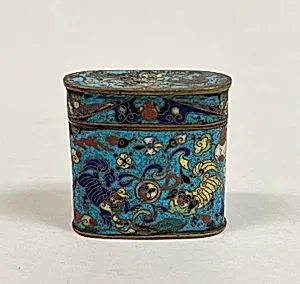
Medium
Cloisonné enamel on gilt copper
Dimensions
H. 2 1/8 in. (5.4 cm); D. 2 1/4 in. (5.7 cm)
Classification
Cloisonné
Culture & Period
China · Ming dynasty (1368–1644)
Department
Asian Art
Museum
Metropolitan Museum of Art, New York, NY
Credit
Gift of Edward G. Kennedy, 1929
Accession Number
29.110.35a, b
Rights
Public Domain
Tags
Art Historical Context
This exquisite *Covered Box* from China's Ming dynasty (13681644) exemplifies the's mastery of cloisonné enamel, a that reached artistic heights during this period. Crafted by an unknown artist on gilt copper, the small lidded container measures just over 2 inches in height and diameter, suggesting it held precious items like cosmetics, incense, or jewelry. Its compact form and luxurious materials reflect the Ming court's appreciation for refined, portable luxury goods, often produced in imperial workshops for elite patrons. Cloisonné enamel involves soldering fine gold or silver wires onto a copper base to create intricate cells, or *cloisons*, which are filled with colorful enamel pastes, fired multiple times, and meticulously polished. The gilt copper foundation here adds a radiant glow, enhancing the vibrant enamels typical of Ming works—likely featuring floral motifs or auspicious symbols, though specifics are unrecorded. This labor-intensive process symbolized technical virtuosity and cultural prestige, bridging metalwork and ceramics traditions. Housed in the Metropolitan Museum of Art's Asian Art Department since a 1929 gift from Edward G. Kennedy, this box offers a glimpse into Ming China's global influence, as cloisonné techniques later inspired exports to Europe. A testament to anonymous craftsmanship, it invites visitors to marvel at the enduring allure of imperial ingenuity.