
Covered incense box
ca. 1650
Medium
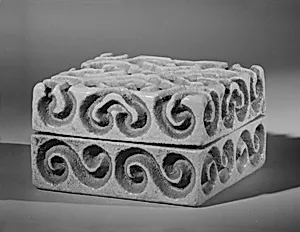
Pottery incised in scroll pattern, in imitation of Chinese carved lacquer; brownish white glaze (Raku ware)
Dimensions
H. 1 1/2 in. (3.8 cm); W. sq. 2 1/2 in. (6.4 cm)
Classification
Ceramics
Culture & Period
Japan · Edo period (1615–1868)
Department
Asian Art
Museum
Metropolitan Museum of Art, New York, NY
Credit
Rogers Fund, 1925
Accession Number
25.60.18a, b
Rights
Public Domain
Art Historical Context
This exquisite covered incense box, crafted by the renowned Raku potter Donyu around 1650, exemplifies the artistry of Japan's Edo period (16151868). Raku Donyu, a master of the Raku lineage, specialized in hand-formed ceramics prized for their organic shapes and subtle glazes. Measuring just 1 1/2 inches high and 2 1/2 inches square, this petite kogo (incense container) was likely used in the Japanese tea ceremony or incense appreciation games, where aromatic scents enhanced sensory rituals. The box's brownish white glaze over incised scroll patterns masterfully imitates the intricate carved lacquerware of China, showcasing Edo-era fascination with continental influences amid Japan's cultural flourishing. Raku ware, low-fired and textured for tactile appeal, contrasts the smoothness of lacquer, blending Japanese simplicity (wabi-sabi) with imported sophistication. The incisions, delicately carved before glazing, create a rhythmic, scrolling motif that evokes flowing silk or ancient scrolls. Housed in the Metropolitan Museum of Art's Asian Art Department (Rogers Fund, 1925), this piece highlights Raku ceramics' evolution from tea utensils to versatile luxury objects, bridging everyday ritual and artistic innovation. Visitors will appreciate its intimate scale—perfect for savoring incense's fleeting fragrance.