
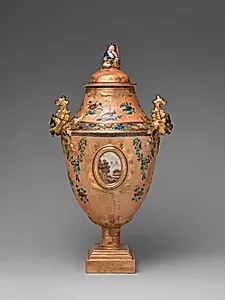
Covered Vase
Unknown Artist
1736–95
Medium
Porcelain
Dimensions
H. 19 in. (48.3 cm)
Classification
Vase
Culture
Chinese
Department
The American Wing
Museum
Metropolitan Museum of Art, New York, NY
Credit
Gift of the Members of the Committee of the Bertha King Benkard Memorial Fund, 1946
Accession Number
46.67.24a, b
Rights
Public Domain
Tags
Art Historical Context
This elegant Covered Vase, crafted in China between 1736 and 1795 during the Qianlong era of the Qing dynasty (1644–1912), stands an impressive 19 inches (48.3 cm) tall. Made of fine porcelain, it exemplifies the technical mastery of Chinese potters at Jingdezhen, the world's porcelain capital, where kaolin clay and high-fired glazes produced translucent, durable wares prized globally. The vase's surface, adorned with landscapes and floral motifs as suggested by its decorative tags, captures the era's love for harmonious nature scenes—rolling hills, blooming flowers evoking prosperity and beauty. Porcelain like this was a pinnacle of artistic innovation, often featuring overglaze enameling techniques that allowed vibrant, multicolored designs to be painted and fired at lower temperatures after the initial glazing. Exported via maritime trade routes to Europe and America, these vessels symbolized luxury and status, influencing global aesthetics from dinner services to decorative arts. Housed in The Metropolitan Museum of Art's American Wing, this piece—gifted in 1946 by the Bertha King Benkard Memorial Fund—highlights transatlantic cultural exchange. Its presence underscores how 18th-century American collectors embraced Chinese exports, bridging Eastern craftsmanship with Western tastes in a virtual museum tour.