
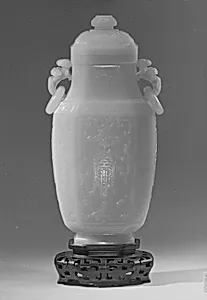
Covered vase
Unknown Artist
early 18th century
Medium
Jade
Dimensions
H. 11 1/8 in. (28.3 cm); H. (with stand) 13 1/16 in. (33.2 cm); W 5 1/2 in. (14 cm)
Classification
Jade
Culture
China
Department
Asian Art
Museum
Metropolitan Museum of Art, New York, NY
Credit
Alfred W. Hoyt Collection, Bequest of Rosina H. Hoppin, 1965
Accession Number
65.86.159a–c
Rights
Public Domain
Art Historical Context
This elegant covered vase, crafted from jade in early 18th-century China, exemplifies the pinnacle of imperial artistry during the Qing dynasty. Standing 11⅛ inches tall (with its stand reaching 13 inches), its smooth, lustrous surface showcases the material's natural translucency and subtle green hues, prized for evoking purity and immortality in Chinese culture. As a covered vessel, it likely served both decorative and ceremonial purposes, reflecting the era's opulent aesthetic under emperors like Kangxi or Yong. Jade, or *yu*, held profound symbolic value in China for over 7,000 years, symbolizing virtue, status, and harmony with nature. Artisans employed masterful techniques—such as incising, drilling, and polishing with abrasives—to transform the tough nephrite stone into refined forms without metal tools, demanding extraordinary skill and patience. This vase's precise proportions and flawless finish highlight the sophisticated workshops of the period, where jade objects were reserved for the elite. Now part of the Metropolitan Museum of Art's Asian Art collection, thanks to the Alfred W. Hoyt Collection bequeathed by Rosina H. Hoppin in 1965, it invites visitors to appreciate the timeless allure of Chinese jade craftsmanship.