
Coverlet (Colcha)
Unknown Artist
ca. 1675–1700
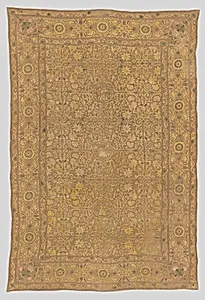
Medium
Cotton, embroidered with silk
Dimensions
9 ft. 2 1/2 in. × 75 in. (280.7 × 190.5 cm)
Classification
Textiles-Embroidered
Culture
Indian, West Bengal, made for the European market
Department
European Sculpture and Decorative Arts
Museum
Metropolitan Museum of Art, New York, NY
Credit
Gift of Karen B. Cohen, in honor of Rochelle C. Rosenberg, 2022
Accession Number
2022.147.9
Rights
Public Domain
Art Historical Context
This stunning Coverlet, or *colcha*, hails from West Bengal, India, around 1675–1700, crafted by an unknown artist specifically for the European market. an impressive 9 feet by over 6 feet, this cotton textile embroidered with silk was likely designed as a luxurious bedcover, reflecting the opulence of the era. Now housed in the Metropolitan Museum of Art's Sculpture and Decorative Arts department, it arrived as a generous gift in 2022, bridging continents and centuries for modern visitors. What makes this piece extraordinary is its testament to early global trade networks. During the late 17th century, European powers like the Portuguese and Dutch eagerly imported Indian textiles, fueling a vibrant exchange of cultures and craftsmanship. West Bengal artisans excelled in such export wares, adapting local motifs—often floral and fantastical—to suit Western tastes, blending Eastern intricacy with European luxury. The embroidery technique, using fine silk threads on sturdy cotton, showcases masterful chain stitching and dense patterning, techniques honed in Indian workshops. This colcha not only warmed beds but symbolized status, highlighting how decorative arts crossed oceans to influence European interiors and tastes. A true gem of intercultural artistry!