
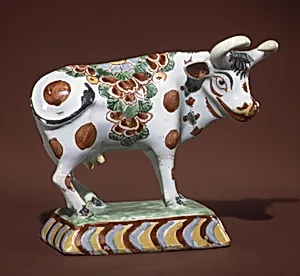
Cow
Medium
Tin-glazed earthenware
Dimensions
Height: 3 3/4 in. (9.5 cm)
Classification
Ceramics-Pottery
Culture
Dutch, Delft
Department
European Sculpture and Decorative Arts
Museum
Metropolitan Museum of Art, New York, NY
Credit
Gift of Henry G. Marquand, 1894
Accession Number
94.4.18
Rights
Public Domain
Tags
Art Historical Context
This delightful tin-glazed earthenwareine, titled *Cow*, captures the charm of 18th-century Delft pottery. Crafted by Anthoni Pennis at the De T Scheepjes (The Two Little Ships) factory, it stands just 3 3/4 inches (9.5 cm) tall, making it a perfect tabletop ornament for affluent Dutch homes. Produced in Delft, the heart of Holland's ceramics industry, such whimsical animal figures reflected everyday rural life, where cows symbolized prosperity and the vital dairy trade that fueled the Dutch Golden Age economy. Delftware, renowned for its tin glaze that created a smooth, white surface ideal for vibrant blue-and-white or polychrome decoration, was Europe's answer to imported Chinese porcelain. Factories like De Twee Scheepjes marked their wares with distinctive symbols—here, evoking two little ships—to denote quality and origin. This technique not only made pottery affordable and exportable but also elevated earthenware to fine art status, adorning interiors across Europe. A generous gift to The Metropolitan Museum of Art from Henry G. Marquand in 1894, this cow exemplifies the enduring appeal of Delft's playful yet masterful ceramics, blending functionality, folk artistry, and cultural pride.