
Cravat (one of a pair)
Unknown Artist
early 18th century
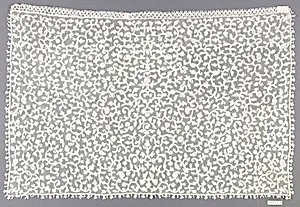
Medium
Bobbin lace, Brussels bobbin lace
Dimensions
L. 16 1/2 x W. 10 1/4 inches (41.9 x 26.0 cm)
Classification
Textiles-Laces
Culture
Italian or Flemish
Department
European Sculpture and Decorative Arts
Museum
Metropolitan Museum of Art, New York, NY
Credit
Gift of Mrs. Edward S. Harkness, 1934
Accession Number
34.119.3
Rights
Public Domain
Art Historical Context
This exquisite cravat, one of a matching pair from the early 18th century, the opulent fashion of Europe's elite during the Baroque era. Likely Italian or Flemish in origin, it served as a gentleman's neckwear—a status symbol worn by aristocrats to display wealth and refinement. Measuring 16½ by 10¼ inches, its delicate form was designed to drape elegantly around the neck, transforming a simple accessory into a canvas of artistry. Crafted in Brussels bobbin lace, a prestigious technique from the lace-making centers of Flanders, this piece highlights the mastery of lacemakers who wove fine linen threads using small bobbins to create intricate, floral motifs and scrolling patterns. Bobbin lace, prized for its durability and complexity compared to needle lace, was a labor-intensive craft that could take months to complete, underscoring the value of such textiles in an age before machine production. Now housed in the Metropolitan Museum of Art's European Sculpture and Decorative Arts Department, thanks to a 1934 gift from Mrs. Edward S. Harkness, this cravat invites us to appreciate the unsung artisans behind fashion's finest details—reminders of a time when every thread told a story of cultural splendor.