
Cream Jug
Unknown Artist
1820–40
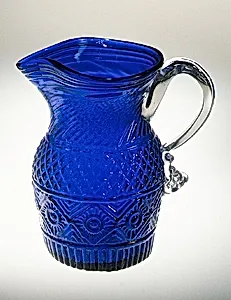
Medium
Blown molded lead blue and colorless glass
Dimensions
H. 5 1/4 in. (13.3 cm)
Classification
Cream jug
Culture
American
Department
The American Wing
Museum
Metropolitan Museum of Art, New York, NY
Credit
Gift of Frederick W. Hunter, 1913
Accession Number
13.120.24
Rights
Public Domain
Art Historical Context
This elegant cream jug, crafted between 1820 and 1840, exemplifies the refined yet practical glassware produced in early nineteenth-century America. Standing just over five inches tall, the vessel combines blown and molded techniques in lead glass, featuring both blue and colorless sections that create a striking visual contrast. Its modest size and graceful form suggest it was designed for everyday use on American tables, where such pieces added a touch of sophistication to mealtimes. The unknown maker employed the blown-molded method, a process that allowed for efficient production while achieving delicate patterns and sturdy construction. Lead glass, prized for its clarity and resonant quality, was especially favored in American workshops during this period as the young nation developed its own glassmaking industry, moving beyond European imports. The jug’s presence in the Metropolitan Museum’s American Wing highlights how ordinary household objects like this one reflect broader cultural shifts toward domestic elegance and self-sufficiency. Donated to the museum in 1913 by collector Frederick W. Hunter, the piece offers visitors a tangible connection to the tastes and craftsmanship of antebellum America. Its simple beauty reminds us that even utilitarian items could embody artistic care and regional identity.