
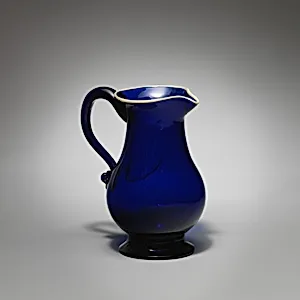
Cream pitcher
Unknown Artist
18th century
Medium
Glass
Dimensions
Height: 4 1/4 in. (10.8 cm)
Classification
Glass
Culture
British, Bristol
Department
European Sculpture and Decorative Arts
Museum
Metropolitan Museum of Art, New York, NY
Credit
Gift of Frederick W. Hunter, 1913
Accession Number
13.179.29
Rights
Public Domain
Art Historical Context
This delicate cream pitcher, crafted in 18th-century Bristol, England, exemplifies the everyday elegance of British glassware from a thriving industrial hub. Standing just 4¼ inches (10.8 cm) tall, it was designed for pouring cream into tea or coffee, reflecting the era's booming culture of genteel domestic rituals. Bristol emerged as a key center for glass production during this period, rivaling more famous locales like by offering affordable, high-quality pieces for middle-class households. Made of glass through skilled blowing and molding techniques, the pitcher highlights the technical prowess of anonymous artisans who balanced functionality with subtle aesthetic appeal. Its form—likely slender and spout-equipped—prioritizes practicality while contributing to coordinated table services that symbolized hospitality and refinement in Georgian Britain. Though the artist remains unknown, such objects underscore the democratic spread of decorative arts beyond elite patronage. Now housed in the Metropolitan Museum of Art's Department of European Sculpture and Decorative Arts, this pitcher was generously gifted by Frederick W. Hunter in 1913. It invites us to appreciate how humble vessels like this captured the social graces of their time, bridging utility and quiet beauty.