
Cream pitcher (part of a service)
ca. 1780–90
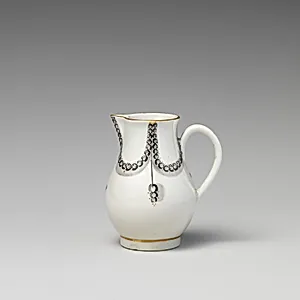
Medium
Soft-paste porcelain with enamel decoration and gilding
Dimensions
Height: 2 7/16 in. (6.2 cm)
Classification
Ceramics-Porcelain
Culture
British, Caughley
Department
European Sculpture and Decorative Arts
Museum
Metropolitan Museum of Art, New York, NY
Credit
Gift of Dr. and Mrs. A. L. Garbat, 1961
Accession Number
61.107.358
Rights
Public Domain
Art Historical Context
This delicate cream pitcher, crafted by the renowned Caughley Factory around 1780–90, exemplifies the elegance of British soft-paste porcelain during the Georgian era. Standing just 2 7/16 inches tall, it part of a larger service, likely for tea or coffee, reflecting the period's obsession with refined tableware. The factory, based in Shropshire,, specialized in accessible luxury porcelain that rivaled pricier imports from China and Meissen, using soft-paste—a vitreous, bone-ash body fired at lower temperatures for a creamy translucency. Adorned with vibrant enamel colors and gleaming gilding, the pitcher features floral motifs, a hallmark of Caughley’s designs that evoked the naturalism of the Rococo style while nodding to Oriental influences. Enamel decoration, applied over the glaze and fired at low heat, allowed for bright hues and intricate details without compromising the porcelain's sheen, while gilding added opulent accents. These techniques made such pieces both functional and decorative, gracing middle-class drawing rooms. As a gift to the Metropolitan Museum of Art in 1961, this pitcher highlights Caughley’s cultural impact: producing thousands of wares that democratized porcelain artistry, blending British innovation with global tastes before the factory closed in 1814. A charming survivor of everyday refinement!