
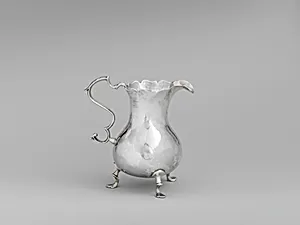
Creamer
ca. 1755–70
Medium
Silver
Dimensions
3 15/16 x 3 15/16 in. (10 x 10 cm); 3 oz. 11 dwt. (110.1 g)
Classification
Cream pot
Culture
American
Department
The American Wing
Museum
Metropolitan Museum of Art, New York, NY
Credit
Bequest of Edward Pearce Casey, 1941
Accession Number
41.112.2
Rights
Public Domain
Art Historical Context
This elegant silver creamer, crafted by Casey around 1755–70, exemplifies the refined artistry of colonial American silversmiths. Hailing from Providence, Rhode Island, Casey was a prominent figure in the mid-18th-century silver trade, producing luxury tableware that rivaled imported English pieces. Measuring a compact 3 15/16 x 3 15/16 inches and weighing just over 3 ounces, this petite vessel was designed for serving cream in tea rituals—a daily luxury for affluent households, symbolizing hospitality and status in pre-Revolutionary America. The creamer's silver medium highlights masterful handcrafting techniques, likely including chasing and engraving to create delicate rococo-inspired motifs common in the period. Such objects were not merely functional but status symbols, reflecting the growing sophistication of American artisans who adapted European styles with local flair. Displayed in The Metropolitan Museum of Art's American Wing, it entered the collection through the 1941 bequest of Edward Pearce Casey, possibly a descendant, underscoring its enduring family legacy. Today, this creamer offers a tangible glimpse into colonial domestic life, where silverware bridged Old World elegance and New World ambition, inviting visitors to ponder the hands that shaped it amid America's formative years.