
Cross
Unknown Artist
ca. 1100
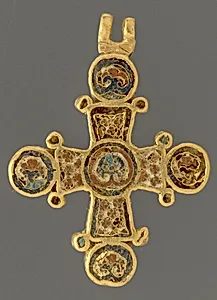
Medium
Gold and enamel worked in cloisonné
Dimensions
15/16 x 7/8 x 1/8 in. (2.36 x 2.07 x 0.31 cm)
Classification
Enamels-Cloisonné
Culture
Byzantine
Department
Medieval Art
Museum
Metropolitan Museum of Art, New York, NY
Credit
Rogers Fund, 1998
Accession Number
1998.542
Rights
Public Domain
Art Historical Context
This exquisite Byzantine cross, crafted around 1100, exemplifies the refined artistry of the Medieval period in the Eastern Roman Empire. Measuring just under an inch tall, it was fashioned from gold using the cloisonné enamel technique—a labor-intensive process where thin gold wires were soldered into cells, or *cloisons*, and with finely ground glass enamels in vibrant colors. Fired multiple times in a kiln, the enamels fused into a durable, jewel-like surface, often depicting religious motifs like Christ, saints, or inscriptions (though specifics here are not detailed). This method, perfected by Byzantine workshops, symbolized divine light and imperial splendor, reserved for sacred objects. In Byzantine culture, such diminutive crosses were likely worn as pectorals by clergy or nobility, or used in processions and personal devotion amid the empire's Orthodox Christian heartland—Constantinople and beyond. They bridged jewelry and liturgy, embodying faith's intimacy during a time of Crusades and icon veneration. Acquired through the Rogers Fund in 1998, this piece at The Metropolitan Museum of Art highlights cloisonné's technical mastery, influencing later European enameling and underscoring Byzantium's enduring legacy in religious art. A tiny treasure revealing a vast spiritual world!