
Crucible
Unknown Artist
ca. 1479–1458 B.C.
Medium
Baked mud Papyrus, Parchment, Paper
Dimensions
L. 21.5 cm (8 7/16 in)
Classification
Crucible
Period
New Kingdom
Department
Egyptian Art
Museum
Metropolitan Museum of Art, New York, NY
Credit
Rogers Fund and Edward S. Harkness Gift, 1922
Accession Number
22.3.288
Rights
Public Domain
Art Historical Context
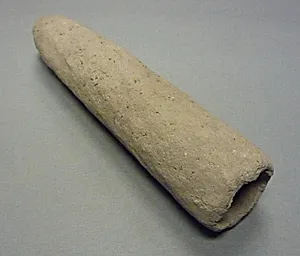
### Crucible, ca. 1479–1458 B.C. This intriguing crucible, crafted from baked mud by an unknown ancient Egyptian artisan, hails from the New Kingdom's Dynasty 18—a golden age of pharaonic power under rulers like Hatshepsut and Thutmose III. Measuring 21.5 cm in length, this heat-resistant vessel was essential for metallurgy, likely used to melt precious metals such as gold or copper in workshops buzzing with activity. Acquired by the Metropolitan Museum of Art in 1922 through the Rogers Fund and Edward S. Harkness Gift, it offers a tangible glimpse into Egypt's advanced craftsmanship. Baked mud, a simple yet ingenious medium, was fired at high temperatures to create a durable, refractory ceramic capable of withstanding intense heat without cracking. This technique underscores the Egyptians' mastery of pyrotechnology during a period of expansive trade and monumental building, where metals adorned temples, tombs, and royal regalia. Though listed alongside papyrus, parchment, and paper—materials iconic to Egyptian record-keeping—its primary form highlights practical innovation over decoration. As a relic of everyday industry, this crucible reveals the unsung labor behind Egypt's splendor, bridging art and technology in the New Kingdom's thriving economy. Visitors, imagine the glow of molten gold within its sturdy walls!