
Crucifix
Unknown Artist
ca. 1180–90
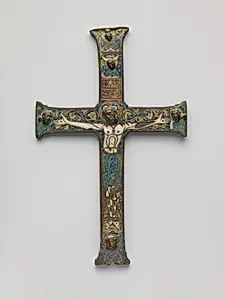
Medium
Champlevé enamel, copper-gilt
Dimensions
Overall: 7 7/8 x 5 x 3/8 in. (20 x 12.7 x 0.9 cm)
Classification
Enamels-Champlevé
Culture
French
Department
Medieval Art
Museum
Metropolitan Museum of Art, New York, NY
Credit
Gift of J. Pierpont Morgan, 1917
Accession Number
17.190.758
Rights
Public Domain
Tags
Art Historical Context
This exquisite Crucifix, crafted in France around 1180–90, exemplifies the devotional artistry of the High Middle Ages. Measuring a compact 7⅞ x 5 x ⅜ inches, it features copper-gilt base adorned with champlevé enamel—a sophisticated technique where artisans carved troughs into the metal, filled them with powdered glass enamel, and fired it to create vibrant, durable colors. This method, popular in medieval Europe, allowed for intricate designs that captured the glow of gemstones while remaining affordable for churches and pious laypeople. As a poignant symbol of Christ's sacrifice, the piece reflects the era's intense religious fervor, when crucifixes served as focal points for prayer and contemplation. The unknown artist's mastery of champlevé highlights French enameling prowess, bridging Romanesque solidity with emerging Gothic elegance. Its vivid enamels likely once shimmered in candlelight, drawing worshippers closer to the divine. A cherished gift from J. Pierpont Morgan to The Metropolitan Museum of Art in 1917, this rare survivor invites us to ponder medieval faith and craftsmanship, reminding visitors of art's enduring spiritual power.