
Cuff Bracelet with Lion Cub Amulets
Unknown Artist
ca. 1479–1425 B.C.
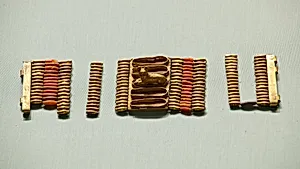
Medium
Gold, carnelian, lapis-lazuli, turquoise glass
Dimensions
Dimension of cat spacer D. 5.2 cm.; W. 2.9 cm.; barrels L. 0.6-0.9 cm.
Classification
Bracelet
Period
New Kingdom
Department
Egyptian Art
Museum
Metropolitan Museum of Art, New York, NY
Credit
Fletcher Fund, 1926 (26.8.124a–g); Lila Acheson Wallace Gift, 1987 (1987.399.2a); Purchase, Lila Acheson Wallace Gift, 1988 (1988.17h)
Accession Number
26.8.124a–g
Rights
Public Domain
Tags
Art Historical Context
This exquisite cuff bracelet, crafted around 1479–1425 B.C. during Egypt's New Kingdom (Dynasty 18), exemplifies the opulent jewelry of the era's elite. Housed in the Metropolitan Museum of Art's Egyptian Art department, it was acquired through generous gifts and purchases, including the Fletcher Fund and Lila Acheson Wallace contributions. Fashioned from gleaming gold—symbolizing eternity and divinity—and inlaid with vibrant carnelian, lapis lazuli, and turquoise glass, the piece reflects the advanced metallurgy and gem-working techniques of ancient Egyptian artisans. These imported stones, like prized lapis from Afghanistan, underscored the wearer's wealth and access to far-flung trade networks at the height of Egypt's imperial power. At its heart are charming lion cub amulets, including a notable cat spacer (diameter 5.2 cm, width 2.9 cm) and tiny barrel beads (0.6–0.9 cm long). Lions held profound cultural significance in ancient Egypt, embodying strength, protection, and royal ferocity—often linked to goddesses like Sekhmet. As amulets, these playful cubs likely served apotropaic purposes, warding off evil while adorning the wrist in daily or ceremonial life. Such intricate, modular designs allowed for customizable display, blending artistry with spirituality. Imagine slipping this treasure onto your arm, feeling the weight of millennia-old magic— a testament to New Kingdom mastery and enduring allure.