
Cuirass
Unknown Artist
dated 1744
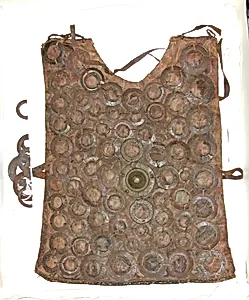
Medium
Leather, iron, brass, silver
Classification
Armor Parts
Culture
Sudanese
Department
Arms and Armor
Museum
Metropolitan Museum of Art, New York, NY
Credit
Bequest of George C. Stone, 1935
Accession Number
36.25.467a, b
Rights
Public Domain
Art Historical Context
Step into the world of 18th-century Sudanese warfare with this striking *Cuirass*, a torso-protecting piece of armor dated 1744. Crafted by an unknown Sudanese artisan, it exemplifies the practical yet ornate defenses used by warriors in the Funj Sultanate era, a time of regional conflicts and cavalry prowess in what is now Sudan. Housed in the Metropolitan Museum of Art's Arms and Armor Department—thanks to the 1935 bequest of George C. Stone—this cuirass offers a rare glimpse into North African military traditions. Made from layered leather reinforced with iron plates, brass fittings, and silver embellishments, the cuirass blends functionality with aesthetic appeal. The leather base provided flexibility for mounted combat, while metal elements added crucial protection against blades and projectiles. Silver accents, often reserved for elite fighters, highlight the piece's status as both a battlefield essential and a symbol of prestige. In Sudanese culture, such armor underscored the fusion of utility and artistry, reflecting a society where warfare intertwined with craftsmanship. This artifact invites us to ponder the lives of its wearers—fierce horsemen navigating deserts and battles—preserving a tangible link to Sudan's resilient martial heritage.