
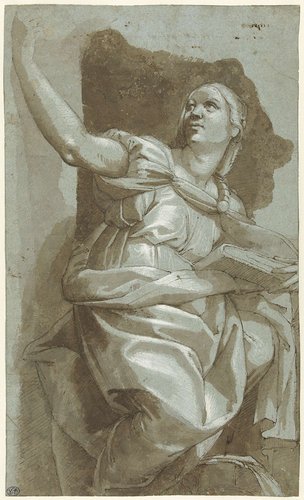
Cumaeïsche sibylle
Federico Barocci, 1556 - 1566
About this artwork
Federico Barocci's *Cumaeïsche sibylle* (Cumaean Sibyl), created between 1556 and 1566, is a captivating pen drawing measuring 380 mm in height by 230 mm in width. The Cumaean Sibyl, a legendary prophetess from ancient Greek and Roman mythology, was renowned for her oracles and her role in guiding Aeneas to the underworld in Virgil's *Aeneid*. Barocci, a masterful Italian artist from Urbino active during the late Renaissance, captures her with dynamic energy, reflecting his early training under his uncle and influences from Raphael and Correggio. Executed in pen and ink—a medium Barocci favored for its precision and expressiveness—this sheet likely served as a preparatory study, showcasing his skill in fluid line work and anatomical grace. During this period, Barocci was transitioning toward Mannerism, blending idealized forms with emotional depth, before health issues led him to a more contemplative studio practice. In Renaissance art, sibyls symbolized prophetic wisdom and bridged pagan antiquity with Christian theology, appearing in grand frescoes like Michelangelo's Sistine Chapel. This intimate drawing highlights Barocci's innovative draftsmanship, offering visitors a glimpse into the creative process of one of the era's most poetic painters.