
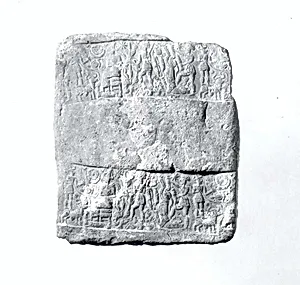
Cuneiform tablet case impressed with cylinder seal in Anatolian style
Unknown Artist
ca. 20th–19th century BCE
Medium
Clay
Dimensions
6.8 x 5.8 x 1.6 cm (2 5/8 x 2 1/4 x 5/8 in.)
Classification
Clay-Tablets-Inscribed-Seal Impressions
Culture & Period
Old Assyrian Trading Colony · Middle Bronze Age–Old Assyrian Trading Colony
Department
Ancient Near Eastern Art
Museum
Metropolitan Museum of Art, New York, NY
Credit
Purchase, Mrs. Peter Oliver Gift, 1977
Accession Number
1977.371
Rights
Public Domain
Art Historical Context
Step into the bustling world of ancient trade with this remarkable cuneiform tablet case from the Old Assyrian Trading Colony, dating to around the 20th–19th century BCE. Crafted from clay and measuring a compact 6.8 x 5.8 x 1.6 cm, this artifact hails from the Middle Bronze Age in Anatolia (modern-day Turkey). It served as a protective envelope for fragile cuneiform tablets, which recorded vital commercial transactions in the far-flung Assyrian merchant colonies like Kanesh. What makes this piece especially intriguing is the impressed cylinder seal in Anatolian style—a technique where a carved stone seal was rolled across the soft clay, leaving a raised, intricate design as a mark of authenticity and ownership. These seals were essential in the trust-based economy of ancient Near Eastern trade, preventing tampering with documents detailing exchanges of tin, textiles, and lapis lazuli between Mesopotamia and Anatolia. The Anatolian influence hints at cultural fusion in these vibrant trading hubs. Today, housed in the Metropolitan Museum of Art's Department of Ancient Near Eastern Art (purchased with the Mrs. Peter Oliver Gift in 1977), this unassuming clay case offers a tangible link to the entrepreneurs who knit together the Bronze Age world. It's a testament to how everyday objects illuminate epic histories of commerce and connection.