
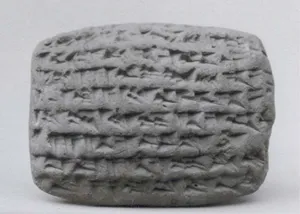
Cuneiform tablet: declaration before witnesses, Egibi archive
Unknown Artist
ca. mid 6th–early 5th century BCE
Medium
Clay
Dimensions
3.4 x 4.5 x 1.6 cm (1 3/8 x 1 3/4 x 5/8 in.)
Classification
Clay-Tablets-Inscribed
Culture & Period
Babylonian or Achaemenid · Neo-Babylonian or Achaemenid
Department
Ancient Near Eastern Art
Museum
Metropolitan Museum of Art, New York, NY
Credit
Purchase, 1879
Accession Number
79.7.32
Rights
Public Domain
Art Historical Context
Nestled in the Metropolitan Museum of Art's Ancient Eastern Art collection, this clay tablet from the mid-6th to early 5th century exemplifies the everyday artistry of Babylonian or Achaemenid scribes Measuring just 3.4 x 4.5 x 1.6 cm, it bears cuneiform inscriptions—a wedge-shaped script pressed into soft clay with a reed stylus, then baked for durability. This technique, perfected over millennia, made clay tablets the ancient world's go-to medium for permanent records, from epics to receipts. Hailing from the renowned Egibi archive, a trove of business documents from a prominent Babylonian entrepreneurial family, this tablet records a formal declaration made before witnesses. Likely tied to legal or commercial matters, it offers a glimpse into the bustling economy of Neo-Babylonian or early Achaemenid Babylon, where precise documentation underpinned trade, loans, and property deals. Such artifacts reveal a sophisticated bureaucracy that bridged empires. Though small, this tablet's cultural weight is immense: it humanizes ancient Mesopotamia, showing how ordinary people navigated contracts and community trust long before paper or digital ledgers. A testament to enduring ingenuity, it invites us to ponder the scribes' meticulous craft amid Babylon's towering ziggurats.