
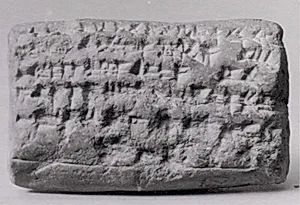
Cuneiform tablet: promissory note for silver for purchase of sheep, Ebabbar archive
Unknown Artist
ca. 612 BCE
Medium
Clay
Dimensions
1.25 x 2.12 x .83 in. (3.18 x 5.38 x 2.1 cm)
Classification
Clay-Tablets-Inscribed
Culture & Period
Babylonian · Neo-Babylonian
Department
Ancient Near Eastern Art
Museum
Metropolitan Museum of Art, New York, NY
Credit
Purchase, 1886
Accession Number
86.11.184
Rights
Public Domain
Art Historical Context
Step into the bustling world of ancient Babylon with this unassuming yet extraordinary cuneiform tablet from around 612 BCE. Housed in the Metropolitan Museum of Art's Ancient Eastern Art department, this small clay artifact—measuring just 1.25 x 2.12 x 0.83 inches—was crafted during the Neo-Babylonian period, a time of imperial expansion under rulers like Nabopolassar, just before Nebuchadnezzar II's reign. Part of the Ebabbar, it records a promissory note for used to purchase sheep, offering a rare glimpse into everyday commerce in one of antiquity's great civilizations. Cuneiform, the world's oldest writing system, was impressed into soft clay with a reed stylus, forming distinctive wedge-shaped marks that were then dried or fired for durability. This practical medium made clay tablets ideal for contracts, accounts, and legal documents, preserving thousands of such records from Babylonian temples and merchants. Here, the inscribed text details a financial obligation tied to livestock trade, highlighting the temple's role in economic life—Ebabbar likely linked to Sippar's temple of the sun god Shamash. This tablet's significance lies in its ordinariness: it humanizes the Neo-Babylonians, revealing a sophisticated market economy reliant on credit, animals, and precious metals amid grand ziggurats and hanging gardens. Acquired by purchase in 1886, it reminds us that history's greatest stories often hide in humble ledgers.