
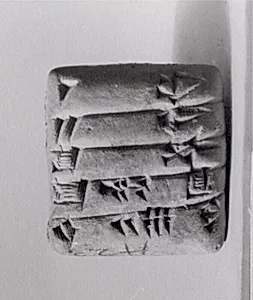
Cuneiform tablet: record of bovine disbursements
Unknown Artist
ca. 2045 BCE
Medium
Clay
Dimensions
3.1 x 2.9 x 1.4 cm (1 1/4 x 1 1/8 x 1/2 in.)
Classification
Clay-Tablets-Inscribed
Culture & Period
Neo-Sumerian · Ur III
Department
Ancient Near Eastern Art
Museum
Metropolitan Museum of Art, New York, NY
Credit
Purchase, by exchange, 1911
Accession Number
11.217.12
Rights
Public Domain
Art Historical Context
This unassuming clay tablet, dating to around 2045 BCE, hails from the Neo-Sumerian III period—one of the most bureaucratically sophisticated eras in ancient Mesopotamia. Measuring just 3.1 x 2.9 x 1.4 cm, it served as a practical record of bovine disbursements tracking the distribution of cattle in what was likely an agricultural or temple economy. Such tablets were everyday tools of administration in the city-state of Ur, reflecting a highly organized society that managed vast resources through meticulous accounting. Inscribed with cuneiform script—the world's oldest known writing system—using wedge-shaped impressions made by a reed stylus on wet clay, this artifact exemplifies Neo-Sumerian scribal artistry. Once fired for durability, it reveals how writing revolutionized governance, enabling precise economic oversight amid the Third Dynasty of Ur's golden age of prosperity and monumental architecture. Though small, it offers a window into daily life, where livestock like oxen were vital for plowing fields, rituals, and trade. Today, housed in the Metropolitan Museum of Art's Ancient Near Eastern Art department, this tablet underscores the cultural importance of clay as an accessible, long-lasting medium. It reminds us that ancient innovation in record-keeping laid the foundation for modern bureaucracy, turning humble clay into history's ledger.