
Cup
Unknown Artist
first half of the 6th century BCE
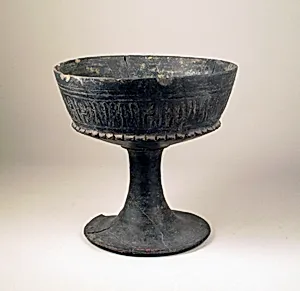
Medium
Terracotta
Dimensions
5 13/16 × 5 15/16 in. (14.8 × 15.1 cm) Diam. of foot: 4 3/8 in. (11.1 cm)
Classification
Vases
Culture & Period
Etruscan · Archaic
Department
Greek and Roman Art
Museum
Metropolitan Museum of Art, New York, NY
Credit
Purchase, 1896
Accession Number
96.9.143
Rights
Public Domain
Tags
Art Historical Context
This elegant terracotta cup from the first half of the 6th century BCE offers a glimpse into Etrus daily life and artistry during the Archaic period. Craft by an unknown artist, it exemplifies the Etruscans' skill in pottery-making, a culture flourishing in central Italy before the rise of Rome. Influenced by Greek imports and techniques, Etruscan vases like this one blended functionality with decoration, often featuring human figures in painted scenes that depicted myths, rituals, or everyday scenes—though specifics here remain tantalizingly elusive. Made from fired clay, the cup's modest dimensions (about 5 13/16 × 5 15/16 inches, with a 4 3/8-inch foot diameter) suggest it was a practical drinking vessel for symposia or household use, yet its survival highlights the durability of terracotta. Acquired by the Metropolitan Museum of Art in 1896, it resides in the Greek and Roman Art department, underscoring Etruscan contributions to Western art. These vessels bridged utility and aesthetics, preserving cultural narratives through subtle human motifs that connected the living with their gods and ancestors. Fun fact: At over 2,500 years old, this cup invites us to imagine it raised in toast by an Etruscan elite, its surface alive with stories now faded by time.