
Cup
Unknown Artist
1785–1805
Medium
Porcelain
Dimensions
H. 2 1/2 in. (6.4 cm); Diam. 2 1/4 in. (5.7 cm)
Classification
Cup
Culture
Chinese
Department
The American Wing
Museum
Metropolitan Museum of Art, New York, NY
Credit
Harris Brisbane Dick Fund, 1938
Accession Number
38.165.42
Rights
Public Domain
Tags
Art Historical Context
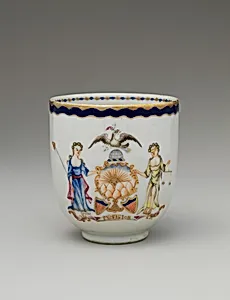
This delicate porcelain cup, crafted in China between 1785 and1805, exemplifies the export porcelain that flooded Western markets during the late th and early 19th centuries. Standing just 2½ inches tall with a 2¼-inch diameter, its petite scale made it ideal for tea drinking or as a personal vessel in affluent households. The medium—fine white porcelain, likely from Jingdezhenns—highlights China's mastery of high-fired kaolin clay, producing a translucent, durable body prized for its purity and subtle glow. A distinctive coat of arms adorns the cup, a customization popular among European and American elites who commissioned Chinese potters to replicate family crests via detailed enameling techniques. This practice bridged Eastern artistry with Western heraldry, turning everyday objects into symbols of status. Displayed in The Metropolitan Museum of Art's American Wing and acquired through the Harris Brisbane Dick Fund in 1938, the cup reflects transatlantic trade networks, where such wares graced American dining tables amid the young republic's growing taste for luxury imports. Its presence in the American Wing underscores porcelain's role in early U.S. material culture, blending Chinese innovation with colonial aspirations. Visitors can appreciate how this unassuming cup captures a global exchange of aesthetics and prestige.