
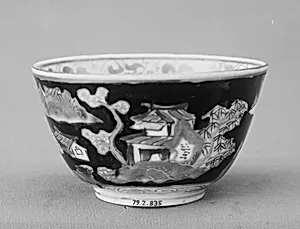
Cup
Unknown Artist
18th century
Medium
Porcelain decorated under the glaze
Dimensions
H. 1 1/2 in. (3.8 cm); Diam. 2 3/4 in. (7 cm)
Classification
Ceramics
Culture & Period
Japan · Edo period (1615–1868)
Department
Asian Art
Museum
Metropolitan Museum of Art, New York, NY
Credit
Purchase by subscription, 1879
Accession Number
79.2.835
Rights
Public Domain
Tags
Art Historical Context
This delicate porcelain cup, crafted in Japan during the 18th's Edo period (16151868), exemplifies the's refined ceramic artistry. Standing just 1 1/2 inches tall with a 2 3/4-inch diameter its petite scale suggests use in intimate rituals like tea ceremonies or sake service, reflecting the period's booming urban culture and merchant class sophistication. Produced amid Japan's peaceful isolation under the Tokugawa shogunate, such vessels highlight the nation's mastery of porcelain, a material prized for its translucency and durability. The cup's decoration—featuring motifs of houses painted under the glaze—demonstrates an innovative technique where pigments are applied to the unfired clay, then sealed beneath a transparent glaze and fired at high temperatures. This underglaze method ensured vibrant, long-lasting colors resistant to wear, a hallmark of Japanese export wares like those from Arita kilns, though this piece served domestic tastes. The house imagery evokes Edo's (modern Tokyo) bustling neighborhoods, capturing everyday life in a time of artistic flourishing. Acquired by subscription in 1879 for the Metropolitan Museum of Art's Asian Art collection, this anonymous masterpiece invites visitors to ponder the quiet elegance of 18th-century Japanese daily life, where even a simple cup embodied cultural harmony and technical prowess.