
Cup
Unknown Artist
Medium
Porcelain
Dimensions
H. 1 5/8 in. (4.1 cm); Diam. at mouth 2 5/8 in. (6.7 cm)
Classification
Ceramics
Culture & Period
China · Ming dynasty (1368–1644), Jiajing period (1522–66)
Department
Asian Art
Museum
Metropolitan Museum of Art, New York, NY
Credit
Bequest of Robert West, 1950
Accession Number
50.221.37
Rights
Public Domain
Tags
Art Historical Context
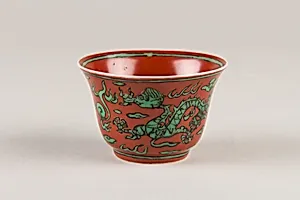
This delicate porcelain cup, crafted in China during the Ming dynasty's Jiajing period (1522–66), exemplifies the era's unparalleled mastery of ceramics. Standing just 1 5/8 inches tall with a mouth diameter of 2 5/8 inches, it was likely designed for intimate use—perhaps sipping tea or wine among the elite. Ming porcelain from kilns like those in Jingdezhen represented the pinnacle of technical innovation, using fine kaolin clay fired at high temperatures to achieve a translucent, resonant body prized worldwide. Adorned with dragons—a recurring motif tagged here—the cup carries profound imperial symbolism. In Chinese culture, five-clawed dragons embodied the emperor's power, protection, and cosmic harmony, especially resonant during Jiajing emperor's Daoist-influenced reign. These dynamic creatures, often painted in underglaze blue, showcased painters' skill in capturing fluid motion on such a petite scale, blending artistry with political prestige. Bequeathed to the Metropolitan Museum of Art by Robert West in 1950, this anonymous treasure invites us to ponder daily luxuries of Ming court life, where even a simple cup whispered of dynastic grandeur.