
Cup
Unknown Artist
18th century
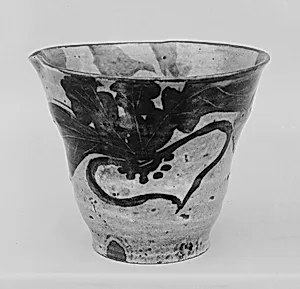
Medium
Clay covered with a transparent glaze and decorated under the glaze (Kiyomizu ware, Kenzan style)
Dimensions
H. 4 3/8 in. (11.1 cm)
Classification
Ceramics
Culture & Period
Japan · Edo period (1615–1868)
Department
Asian Art
Museum
Metropolitan Museum of Art, New York, NY
Credit
Gift of Mr. and Mrs. Samuel Colman, 1893
Accession Number
93.1.51
Rights
Public Domain
Tags
Art Historical Context
This delicate cup, crafted in 18th-century Japan during the Edo (1615–1868), exemplifies the refined artistry of Kiyomizu from Kyoto. Standing just 4 3/8 inches (11.1 cm) tall, it is formed from clay coated with a transparent glaze, subtle leaf motifs painted beneath the glaze—a technique that embeds the decoration permanently into the surface, ensuring vibrant colors and durability over time. Produced by an unknown artist in the esteemed Kenzan style it echoes the innovative spirit of potter Ogata Kenzan (1663–1743), whose playful designs blended painting and ceramics. Kiyomizu ware, named after the Kiyomizu district in Kyoto, emerged in the late 17th century and became prized for its colorful, nature-inspired motifs. This underglaze method, less common than the overglaze enamels typical of the style, highlights the versatility of Japanese potters during a prosperous era when urban culture flourished. Such cups were likely used in the tea ceremony (chanoyu) or everyday rituals, symbolizing harmony with nature through their leaf patterns. Now housed in the Metropolitan Museum of Art's Asian Art Department, thanks to a 1893 gift from Mr. and Mrs. Samuel Colman, this piece invites visitors to appreciate Edo Japan's masterful fusion of function and beauty in ceramics.