
Cup
Unknown Artist
late 17th–early 18th century
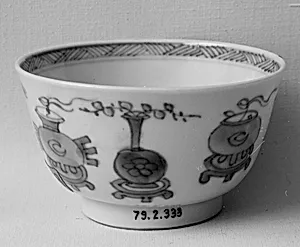
Medium
Porcelain painted in underglaze blue
Dimensions
H. 1 5/8 in. (4.1 cm); Diam. of foot: 1 1/2 in. (3.8 cm); Diam. of rim: 2 3/4 in. (7 cm)
Classification
Ceramics
Culture & Period
China · Qing dynasty (1644–1911), Kangxi period (1662–1722)
Department
Asian Art
Museum
Metropolitan Museum of Art, New York, NY
Credit
Purchase by subscription, 1879
Accession Number
79.2.333
Rights
Public Domain
Art Historical Context
This delicate porcelain cup, crafted in China during the Kangxi period (1662–1722) of the Qing dynasty, exemplifies the pinnacle of imperial porcelain production at the Jingdezhen kilns. just 1⅝ inches tall with a wide 2¾-inch rim, its petite scale suggests it was designed for sipping tea or wine, reflecting the refined tastes of the era's elite. The late 17th- to early 18th-century places it amid a flourishing of export porcelain, eagerly sought by European collectors for its luminous white body and vibrant underglaze blue decoration—a technique where cobalt pigment is applied beneath the glaze before firing, yielding enduring, jewel-like hues impervious to wear. Underglaze blue painting became a hallmark of Chinese ceramics under Kangxi emperor's patronage, blending Ming dynasty traditions with innovative designs that often featured floral motifs, landscapes, or auspicious symbols (though specifics here remain undocumented). This cup's craftsmanship highlights the technical mastery of Qing potters, who achieved translucency and precision rivaling jade. Acquired by subscription in 1879 for the Metropolitan Museum of Art, it offers visitors a tangible link to China's global artistic influence, bridging Eastern refinement with Western admiration.