
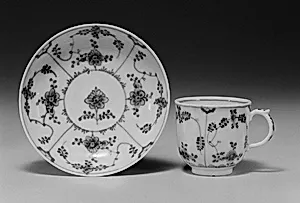
Cup and saucer
Medium
Hard-paste porcelain
Dimensions
Cup (.251): H. 2-1/2 in. (6.4 cm.); Saucer (.252): Diam. 5-5/16 in. (13.5 cm.)
Classification
Ceramics-Porcelain
Culture
Swiss, Zurich
Department
European Sculpture and Decorative Arts
Museum
Metropolitan Museum of Art, New York, NY
Credit
The Hans Syz Collection, Gift of Stephan B. Syz and John D. Syz, 1995
Accession Number
1995.268.251, .252
Rights
Public Domain
Tags
Art Historical Context
This elegant cup and saucer, crafted around 1775 by the Zurich and Porcelain Factory, the Swiss mastery of hard-paste porcelain the late 18th century. a dainty 2½ inches high for the cup and 5⅜ inches in diameter for theucer, this set was designed for intimate tea or coffee rituals, reflecting the era's growing fascination with refined domestic luxuries. The factory, one of Europe's pioneering porcelain producers outside royal monopolies like Meissen, used the prized hard-paste formula—kaolin clay fired at high temperatures—to create a durable, translucent material rivaling Chinese imports. Hard-paste porcelain marked a technological triumph for Zurich artisans, enabling intricate floral decorations (as seen in this piece) that bloomed in vibrant enamels under the glaze. These motifs evoked the natural beauty of the Swiss countryside while aligning with Rococo tastes for delicate, organic forms. Produced in a competitive European market, such wares symbolized status and cultural sophistication, bridging everyday use with artistic excellence. Today, this treasure from The Hans Syz Collection graces the Metropolitan Museum of Art's European Sculpture and Decorative Arts department, inviting visitors to appreciate how Zurich's innovations democratized porcelain's allure.