
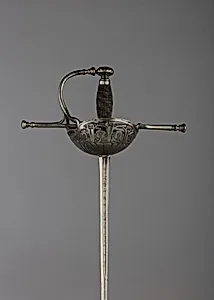
Cup-Hilted Rapier
mid-17th century
Medium
Steel, wood, iron, leather
Dimensions
L. 44 1/2 in. (113 cm); L. of blade 40 1/4 in. (102.2 cm); W. 11 in. (27.9 cm); D. 5 1/4 in. (13.3 cm); Wt. 2 lb. 1 oz. (935.53 g)
Classification
Swords
Culture
German, Solingen; hilt, possibly Spanish
Department
Arms and Armor
Museum
Metropolitan Museum of Art, New York, NY
Credit
Gift of William H. Riggs, 1913
Accession Number
14.25.1066
Rights
Public Domain
Art Historical Context
Step into the world of 17th-century swordplay with this exquisite cup-hilted rapier, by the renowned Solingen bladesmith Peter Tes around the mid-1600s. Hailing from Germany's "City of Blades," Solingen was Europe's premier hub for fine edged weapons, where master smiths like Tesche forged superior steel blades prized for their balance and durability. This rapier, with its slender 40¼-inch blade and protective cup-shaped steel hilt—possibly of Spanish influence—exemplifies the era's blend of deadly functionality and elegant design. The wooden grip wrapped in leather, accented by iron fittings, ensured a secure hold during duels or dress occasions. Cup-hilted rapiers emerged in Spain in the late 16th century and swept across Europe, symbolizing the refined art of civilian fencing amid the Thirty Years' War's turmoil. Tesche's inscription on the blade marks it as a high-quality piece, likely owned by nobility or officers who valued both combat prowess and status. Weighing just over 2 pounds, its lightweight construction highlights advanced metallurgical techniques, allowing agile thrusts over heavy cuts. A generous gift to The Metropolitan Museum of Art from William H. Riggs in 1913, this rapier transports us to an age when steel whispered tales of honor, rivalry, and craftsmanship. (198 words)