
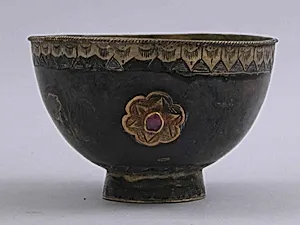
Cup Holder
Unknown Artist
19th century
Medium
Silver; applied decoration, gilding, and cabochon stones
Dimensions
H. 1 3/8 in. (3.5 cm) Diam. 2 1/4 in. (5.7 cm) Wt. 0.9 oz. (25.517g)
Classification
Metal
Department
Islamic Art
Museum
Metropolitan Museum of Art, New York, NY
Credit
Gift of Joseph W. Drexel, 1889
Accession Number
89.2.2163a
Rights
Public Domain
Art Historical Context
This delicate 19th-century silver cup holder, a gem from the Metropolitan Museum of's Islamic Art collection, the refined metalworking traditions of the Islamic world. Measuring just 1⅜ inches high and 2¼ inches in diameter, it a mere 0.9 ounces, making it a portable luxury item designed to cradle small cups of hot beverages like tea or coffee—preventing burns while elevating the drinking ritual. Gifted to the museum in 1889 by W. Drexel, it reflects the opulent tableware favored in Ottoman or Persian courts during a period of artistic flourishing under imperial patronage. Crafted from silver and adorned with applied decoration, gilding, and cabochon stones—smooth, polished gems that catch the light with subtle elegance—the piece showcases virtuoso techniques. Gilding, likely achieved through fire-gilding or electroplating methods common in the 19th century, adds a golden sheen symbolizing wealth and purity. The applied motifs, possibly floral or geometric patterns typical of Islamic design, avoid figurative imagery in line with aniconic traditions, blending functionality with spiritual harmony. As a modest yet masterful artifact, this cup holder highlights the everyday artistry of Islamic craftsmen, bridging utility and beauty in a vanishing world of courtly refinement. Visitors can appreciate how such objects turned simple acts into sensory delights.