
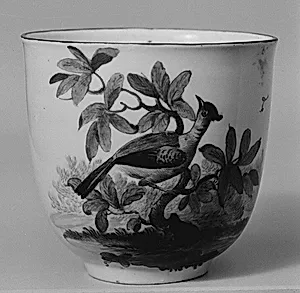
Cup (part of a service)
Medium
Hard-paste porcelain
Dimensions
2 3/4 × 2 3/4 in. (7 × 7 cm)
Classification
Ceramics-Porcelain
Culture
German, Frankenthal
Department
European Sculpture and Decorative Arts
Museum
Metropolitan Museum of Art, New York, NY
Credit
Gift of Walter T. Rosen, in memory of his mother, Mrs. Flora Tower Rosen, 1932
Accession Number
32.71.5
Rights
Public Domain
Tags
Art Historical Context
This delicate cup, crafted around 1770 by the Frankenthal Porcelain Manufactory during the Karl Theodor period, the pinnacle of 18th-century German porcelain. Produced in the Electorate of the Palatinate under the patronage of Elector Karl Theodor, Frankenthal was renowned for its high-quality hard-paste porcelain—a technically advanced medium developed in Europe to rival prized Chinese imports. Made from kaolin clay and fired at intense temperatures, this material allowed for thin, translucent walls and intricate detailing, making pieces like this 2¾-inch cup both functional and luxurious for the table service it belonged to. The cup's surface likely features the factory's signature motifs of birds and plants, painted in vibrant enamels and gilded accents, capturing the Rococo era's love for naturalistic elegance. These designs not only showcased the painters' skill in delicate brushwork but also reflected Enlightenment-era fascination with nature's beauty. As part of a larger service, it would have graced aristocratic dining tables, symbolizing wealth and refined taste. Today, housed in The Metropolitan Museum of Art's European Sculpture and Decorative Arts collection (gift of Walter T. Rosen, 1932), this petite treasure highlights Frankenthal's brief but brilliant legacy, which ended with political upheavals in the 1790s, preserving a snapshot of pre-Revolutionary European opulence.