
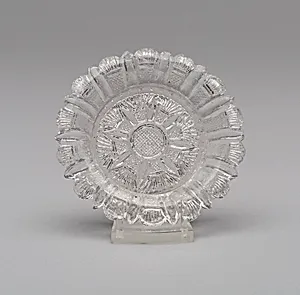
Cup plate
1826–30
Medium
Pressed glass
Dimensions
Diam.: 9.2 cm (3 5/8 in.)
Classification
plate (general, dish)
Department
Arts of the Americas
Museum
Art Institute of Chicago
Accession Number
82679
Rights
Public Domain
Art Historical Context
In the early 19th century, homes buzzed with innovation, and this delicate cup plate from 1826–30 exemplifies spirit. Measuring just 3⅝ inches in diameter, these small pressed glass discs were practical essentials: placed under teacups to catch drips and protect fine table linens during social gatherings. Produced anonymously in one of New England's burgeoning glass factories, it reflects the democratization of luxury goods in a young republic eager to rival European elegance. The medium—pressed glass—was revolutionary. Invented around 1825, the technique involved pouring molten glass into ornate metal molds and pressing it with a plunger, creating intricate patterns at a fraction of the cost of blown or cut glass. This allowed middle-class households access to decorative tableware, often featuring motifs like eagles, flowers, or patriotic symbols that celebrated American identity. Housed in the Art Institute of Chicago's Arts of the Americas department, this unassuming plate whispers of everyday life transformed by industry. It stands as a testament to the era's entrepreneurial zeal, bridging utility and artistry in objects that graced countless hearths. Next time you sip tea, imagine its saucer-sized guardian at work!