
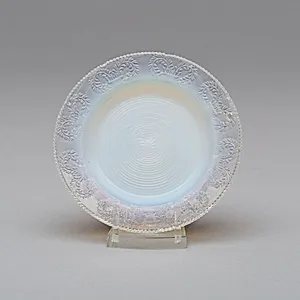
Cup plate
1826–30
Medium
Pressed glass
Dimensions
Diam.: 9.5 cm (3 3/4 in.)
Classification
plate (general, dish)
Department
Arts of the Americas
Museum
Art Institute of Chicago
Accession Number
82695
Rights
Public Domain
Art Historical Context
This delicate cup plate, crafted in pressed glass between 1826 and 1830, exemplifies everyday elegance from early 19th-century America. Measuring just 3¾ inches in diameter, these small saucers were essential tableware, used to rest teacups or coffee cups between sips, safeguarding polished wooden surfaces from heat and moisture rings. Produced during a boom in American glassmaking, they reflect the growing middle class's desire for affordable, refined domestic goods. Pressed glass, a revolutionary technique pioneered in the 1820s, involved pouring molten glass into intricate metal molds and pressing it with a plunger. This innovation, credited to pioneers like Deming Jarves at the Boston & Sandwich Glass Company, allowed for complex patterns and textures previously achievable only in expensive cut glass. Suddenly, decorative tableware became accessible, symbolizing industrial progress and national pride in the young United States. Housed in the Art Institute of Chicago's Arts of the Americas department, this anonymous example highlights the artistry of functional objects. Though its specific design remains understated, it captures a pivotal moment when American ingenuity transformed humble household items into cherished heirlooms.