
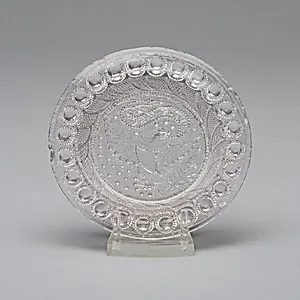
Cup plate
1830–35
Medium
Pressed glass
Dimensions
Diam.: 9.4 cm (3 11/16 in.)
Classification
plate (general, dish)
Department
Arts of the Americas
Museum
Art Institute of Chicago
Accession Number
83411
Rights
Public Domain
Art Historical Context
This delightful cup plate, crafted by the Fort Pitt Glass Works in Pittsburgh between 1830 and 1835, exemplifies the ingenuity of early American glassmaking. Measuring just 3 11/16 inches in, it was designed as a practical yet decorative underliner for teacups, protecting tabletops from hot beverages during the cozy gatherings of 19th-century households. Produced in the Arts the Americas tradition, it's housed in the Art Institute of Chicago's collection. glass, the innovative medium here, revolutionized tableware production in the United States. Mol glass was poured into intricately carved iron molds and pressed under high pressure, allowing for affordable, mass-produced items with elaborate patterns—often floral, geometric, or historical motifs—that mimicked expensive cut glass. Fort Pitt Glass Works, a key player in Pittsburgh's thriving glass industry (fueled by local sand and coal), helped democratize beauty, making ornate dishware accessible to middle-class families amid the young nation's industrial boom. These modest plates hold cultural charm, reflecting America's growing confidence in manufacturing and a taste for refined domesticity. A testament to everyday artistry, this piece invites us to appreciate the blend of utility and elegance in antebellum life.