
Cup plate
1830–35
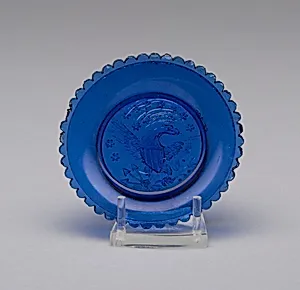
Medium
Pressed glass
Dimensions
Diam.: 7.7 cm (3 in.)
Classification
plate (general, dish)
Department
Arts of the Americas
Museum
Art Institute of Chicago
Accession Number
83425
Rights
Public Domain
Art Historical Context
This delicate cup plate, crafted from pressed glass around 1830–35, exemplifies everyday elegance in early 19th-century American homes. Measuring just 3 inches in, it served a practical purpose: as a small saucer to rest teacups between sips, protecting tabletops from drips and allowing hosts to admire intricate designs without interruption. Housed in the Art Institute of Chicago's Arts of the Americas department, this anonymous work highlights the democratization of decorative arts during a time of rapid industrialization. Pressed glass, a revolutionary technique pioneered in the United States in the 1820s, involved pouring molten glass into metal molds under pressure, enabling mass production of ornate patterns at affordable prices. This innovation shifted glassmaking from elite European imports to vibrant American factories, like those in New England and the Midwest, fostering national pride in domestic craftsmanship. Cup plates often featured motifs such as eagles, flowers, or geometric designs, blending utility with subtle artistry. Though the specific pattern here remains unrecorded, this piece captures the cultural shift toward refined middle-class living, where even humble tableware reflected aspirations for beauty and sophistication in the young republic. A charming window into Victorian-era hospitality!