
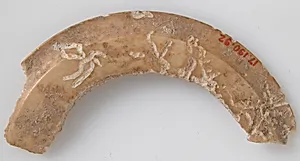
Cup Rim
Unknown Artist
6th–7th century
Medium
Ivory
Dimensions
Overall: 2 1/4 x 7/16 x 1/16 in. (5.7 x 1.1 x 0.1 cm)
Classification
Ivories
Culture
Coptic
Department
Medieval Art
Museum
Metropolitan Museum of Art, New York, NY
Credit
Gift of J. Pierpont Morgan, 1917
Accession Number
17.190.92
Rights
Public Domain
Art Historical Context
This delicate ivory Cup Rim, crafted by an unknown artist in Coptic Egypt during the 6th–7th century, offers a glimpse into the refined artistry of early Christian North Africa. Measuring just 2 1/4 x 7/16 x 1/16 inches, this tiny fragment—likely from a luxurious chalice or vessel—exemplifies the precision of Coptic craftsmen during a time when Egypt bridged late antiquity and the early medieval world. Coptic culture, rooted in the fusion of Pharaonic traditions, Greco-Roman influences, and emerging Christianity, produced such objects for both ecclesiastical rituals and elite households, symbolizing piety and status. Carved from elephant ivory, a prized and durable medium symbolizing purity and exotic wealth, the rim showcases the technical mastery of Coptic ivories. Artisans delicately shaped and incised these thin pieces, often adorning them with intricate motifs that reflected biblical narratives or daily life—though this fragment's precise designs remain subtle in their preservation. Ivory's translucency and workability allowed for fine detailing, making such items enduring treasures. Now housed in the Metropolitan Museum of Art's Medieval Art department, thanks to J. Pierpont Morgan's generous 1917 gift, this Cup Rim invites visitors to ponder the daily devotion and skilled hands behind Coptic creativity. A testament to a vibrant, faith-filled society, it reminds us how even the smallest artifacts illuminate lost worlds.