
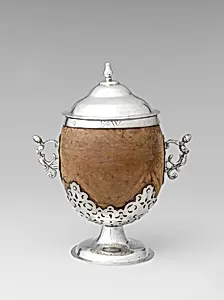
Cup with cover
Unknown Artist
17th century
Medium
Silver, nut
Dimensions
Height: 6 in. (15.2 cm)
Classification
Metalwork-Silver In Combination
Culture
probably Dutch
Department
European Sculpture and Decorative Arts
Museum
Metropolitan Museum of Art, New York, NY
Credit
Gift of Frederic Ashton de Peyster, 1946
Accession Number
46.33.1a, b
Rights
Public Domain
Art Historical Context
This elegant *Cup with Cover*, crafted in the 17th century an unknown artist, exemplifies the exquisite metalwork of the Dutch Golden Age. Standing at a modest 6 inches (.2 cm) tall, it combines shimmering silver with a natural nut element—likely a coconut shell, a prized exotic import reflecting the Netherlands' vast trade networks. Housed in the Metropolitan Museum of Art's Department of European Sculpture and Decor Arts, this piece was generously gifted by Frederic Ashton de Peyster in 6. In an era of booming prosperity from global commerce, such silver-mounted cups were luxury items for the elite, blending European silversmithing techniques with tropical materials. The silver frame, classified as "Metalwork-Silver In Combination," would have showcased intricate chasing or engraving, though worn by time, highlighting the artisan's skill in harmonizing organic curves with polished metal. These vessels served both practical and ceremonial purposes, often displayed on sideboards to signal wealth and refinement. Probably Dutch in origin, the cup captures a cultural moment when Amsterdam's workshops rivaled the finest in Europe, turning everyday objects into art. Visitors, imagine sipping spiced wine from this treasure— a tangible link to a world of seafaring adventure and masterful design.