
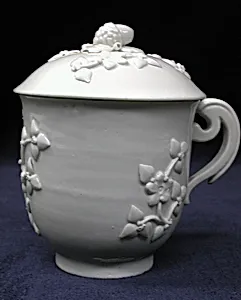
Cup with cover
ca. 1735–40
Medium
Tin-glazed soft-paste porcelain
Dimensions
Height (with cover): 3 13/16 in. (9.7 cm); Height (without cover): 2 3/4 in. (7 cm)
Classification
Ceramics-Porcelain
Culture
French, Chantilly
Department
European Sculpture and Decorative Arts
Museum
Metropolitan Museum of Art, New York, NY
Credit
The Hans Syz Collection, Gift of Stephan B. Syz and John D. Syz, 1995
Accession Number
1995.268.215a, b
Rights
Public Domain
Tags
Art Historical Context
This delicate *Cup with Cover* from the Chantilly porcelain manufactory, dating to around 1735–40, exemplifies early French porcelain artistry during the opulent Rococo era. Produced at the Château de Chantilly under the patronage of Louis-Henri de Bourbon, Prince de Condé, the factory was among France's pioneering centers for soft-paste porcelain, rivaling imports from China and Japan. Standing just under 4 inches tall with its cover, this petite vessel was designed for intimate tea or coffee rituals among the aristocracy, its floral motifs—likely vivid blooms in overglaze enamels—evoking the natural elegance of the period. Crafted from tin-glazed soft-paste porcelain, the cup's body achieves a luminous white surface ideal for intricate decoration, a technique borrowed from faience but elevated for luxury tableware. The tin glaze provided a smooth canvas for hand-painted flowers, while the soft-paste body, fired at lower temperatures than true hard-paste porcelain, allowed for finer molding and detailing. Chantilly pieces often bore the distinctive huntsman's horn mark, symbolizing the estate's hunting traditions. Housed in The Metropolitan Museum of Art's European Sculpture and Decorative Arts collection, this cup highlights France's 18th-century quest for technical innovation and refined taste, bridging Eastern influences with local craftsmanship. A gift from The Hans Syz Collection, it invites visitors to appreciate the fragility and finesse of pre-industrial porcelain mastery.