
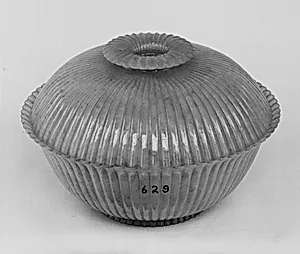
清中期 玉蓋碗|Cup with cover
Unknown Artist
18th–19th century
Medium
Jade (nephrite
Dimensions
H. 3 1/4 in. (8.3 cm); Diam. 4 15/16 in. (12.6 cm)
Classification
Jade
Culture & Period
China · Qing dynasty (1644–1911)
Department
Asian Art
Museum
Metropolitan Museum of Art, New York, NY
Credit
Gift of Heber R. Bishop, 1902
Accession Number
02.18.629a, b
Rights
Public Domain
Art Historical Context
This elegant jade cup with cover, crafted during the mid-Qing dynasty (18th–19th century exemplifies the pinnacle of Chinese jade artistry. Carved from nephrite—a prized form of jade revered for its toughness and luminous translucency—the vessel stands just 3¼ inches tall with a diameter of nearly 5 inches, making it a refined, handheld object suitable for intimate tea ceremonies or elite gatherings. Its compact form highlights the Qing era's mastery in transforming raw stone into functional luxury, where jade symbolized purity, immortality, and imperial virtue. In Qing China (1644–1911), jade carving flourished under imperial patronage, with workshops producing intricate pieces for scholars, officials, and the court. Nephrite, often sourced from distant mines like those in Xinjiang, was meticulously polished to achieve a soft glow, evoking the "warmth" of flesh—a poetic ideal in Chinese aesthetics. Though the artist's identity remains unknown, the cup's survival reflects the period's technical prowess in hollowing and shaping dense jade without flaws. A generous gift to the Metropolitan Museum of Art from Heber R. Bishop in 1902, this piece invites visitors to ponder the daily rituals of China's refined past, where even a simple cup embodied profound cultural elegance.