
Cup with cover ("Permoser Cup")
third quarter 18th century
Medium
Silver, silver gilt, ivory, amber
Dimensions
Height (.69a): 10 11/16 in. (27.1 cm); Height (.69b): 3 1/2 in. (8.9 cm); Height (total): 14 1/16 in. (35.7 cm)
Classification
Metalwork-Silver In Combination
Culture
German, Dresden
Department
European Sculpture and Decorative Arts
Museum
Metropolitan Museum of Art, New York, NY
Credit
Gift of Estate of James Hazen Hyde, 1959
Accession Number
59.208.69a, b
Rights
Public Domain
Tags
Art Historical Context
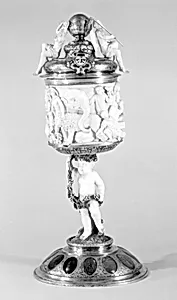
Welcome to the European Sculpture and Decorative Arts gallery, where the *Cup with Cover ("Permoser Cup")* (third quarter of the 18th century) as a dazzling example of Dresden's masterful silversmithing. Crafted by the enigmatic S.W. in Germany, this opulent vessel combines silver and silver gilt for a radiant sheen, enriched with ivory and amber—luxurious materials that evoke the extravagance of the Saxon court under rulers like Augustus III. Measuring a stately 14 inches tall when assembled, it exemplifies "Metalwork-Silver in Combination," a technique blending metals with organic elements for heightened texture and symbolism. Adorned with lively motifs of human figures, majestic lions, and exotic elephants flanking a prominent coat of arms, the cup reflects Baroque-inspired exuberance transitioning toward Rococo playfulness. These elements likely celebrate nobility or imperial power, common in Dresden's courtly commissions, where silver objects served as status symbols at banquets and diplomatic gifts. The intricate chasing and gilding techniques highlight the era's technical virtuosity, transforming functional ware into sculptural art. A generous gift to The Metropolitan Museum of Art from the Estate of James Hazen Hyde in 1959, this piece invites you to imagine candlelit palaces alive with the gleam of amber and the roar of gilded beasts—a testament to 18th-century German craftsmanship at its most imaginative.