
Cupboard
Unknown Artist
1670–1700
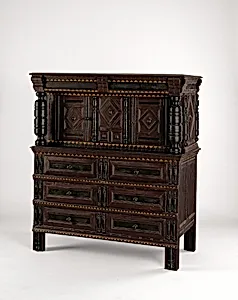
Medium
Red oak, white pine, white cedar, red cedar, black walnut, soft maple
Dimensions
56 x 49 3/4 x 23 in. (142.2 x 126.4 x 58.4 cm)
Classification
Cupboard
Culture
American
Department
The American Wing
Museum
Metropolitan Museum of Art, New York, NY
Credit
Gift of Mrs. J. Insley Blair, 1950
Accession Number
50.20.3
Rights
Public Domain
Art Historical Context
This stately cupboard, crafted between 1670 and 1700 by an unknown American artisan, exemplifies the robust furniture-making traditions of early colonial households. Standing at an impressive 56 x 49¾ x 23 inches, it was constructed from a harmonious blend of native woods—red oak for strength, white pine and cedar for lighter panels, black walnut for rich contrast, and soft maple for details. Such multi-wood construction highlights the practical ingenuity of 17th-century woodworkers, who sourced local timbers to balance durability, workability, and aesthetics in pressed construction techniques like joinery and paneling. Housed in The Metropolitan Museum of Art's American Wing, this piece offers a window into the domestic life of prosperous colonial families, where cupboards served dual purposes as storage for linens, ceramics, and valuables while doubling as symbols of wealth and hospitality. Its survival is remarkable, as few furnishings from this era endure due to heavy use and the perishability of wood. Donated in 1950 by Mrs. J. Insley Blair, it reflects the evolving tastes of New England or Mid-Atlantic cabinetmakers, blending English influences with American adaptation in form and finish. Visitors will appreciate how this cupboard captures the grit and grace of America's formative years—a testament to anonymous hands shaping everyday elegance.